Interview
[unknown]
October
1992
Original article: 
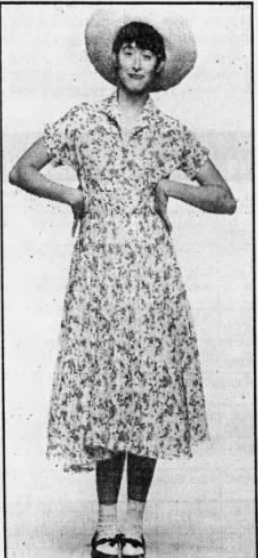
“What I’m trying to do is open up new opportunities, new ways of discussing racism. Right now, discussions of racism are limited to one purpose: assigning guilt and innocence. It’s my belief that the real goal in discussing racism should be to cultivate tolerance and understanding.”
That is one reason Michelle Shocked chose a collection of old-time “minstrel” tunes to cap off her trilogy of albums exploring American musical traditions which have influenced her own career. (The previous installments covered Texas folksingers and small-combo blues/swing sounds.) It’s why she crisscrossed the planet, from Chicago and Memphis to Sydney and Dublin, recording the project with backing musicians as diverse as the Irish combo Hothouse Flowers, bluegrass picker Doc Watson, master fiddler Mark O’Connor, [and] blues legend Clarence “Gatemouth” Brown.
It’s why her latest tour, which plays Smith College Saturday night, includes many of the musicians on the album – The Band, Uncle Tupelo, and Taj Mahal.
The new tour, and the album, tackle minstrel music directly, with no apologies. The minstrel show is making a socially conscious comeback as a touchstone to determine how far America has actually come in its stereotyping of blacks as an inferior race good only for dancing or telling jokes.
Shocked doesn’t merely ape songs from the era. She rearranges them, re-interprets them.
“My show,” Shocked says, “is just a revue in the classic sense of a lot of different acts under one roof, and a little bit of mixing and matching.”
The title, Arkansas Traveler, reflects more than just the miles logged in this [sentence ends]
An interview with Michelle Shocked can at times resemble one of those minstrel dialogues between the all-knowing “Mister Interlocutor” and the sheepish and ignorant “Mister Tambo” or “Mister Bones,” the comics on either end of the minstrel “line.”
The interviewer is the one in the bonehead position. Shocked plays the long-suffering, oft misunderstood yet benevolent teacher. In a phone interview held last week while Shocked prepared Traveler for the road, the dialogue went like this:
Mr. Interviewer: “But it’s a…Actually, the album, when I first heard it, it was … so unlike … I was just bowled over by it because of the things that you were getting at that I haven’t seen elsewhere in print and on records. I’m so used to hearing the recreations of people doing the old songs in the usual styles. The fact that you were adding so much … contemporary things … “
Shocked: “Like the ‘Zip-A-Dee-Doo-Dah’ thing, you mean?”
Mr. Interviewer: “Well, that stuff and then … you weren’t trying to copy old Al Jolson records, which happens a lot. You seem to have an understanding of what must have been there and what is still valid. And what you can change now and what shouldn’t be changed.”
Shocked: “Oh. I’m going to take that as a compliment. I appreciate your being willing to ask. It’s, like, your job to ask dumb questions. I’m not insulting you. I appreciate your being willing to just put it out there.”
Mr. Interviewer: “Well … I’ll take that as a compliment.”
Shocked: [Laughing} “Well, that was a backhanded one too, wasn’t it? It’s a real complicated history, and honestly I know too much, more than I ever wanted to know.”
The ‘Zip-A-Dee-Doo-Dah’ thing is the use of that song’s chorus as a tagline to “Jump Jim Crow” halfway through the album. Its use, and a ‘Tar Baby’ reference in the lyrics to the same song:
—“… Tell me true/Who is really the jiggaboo?/Is it the white man, the white, talkin’ that jive?/Or the black man, the black, trying to stay alive?”
—suggest an interest in the Uncle Remus stories appropriated & published by Joel Chandler Harris and used as the basis for the Walt Disney film, Song of the South. “What is that but a minstrel show?” Shocked says. “[Harris] was a white man. I don’t limit Arkansas Traveler to one form—the line or the “Mr. Interlocutor/Tambo/Bones” formation, or the ‘Coon-song’ era, tent shows, and medicine shows. My interest is having the whole spectrum. It’s a whole ongoing culture that’s never died. The ‘Coon song’ era—Tin Pan Alley, that stuff, is just a continuation of minstrelsy.”
A press release by Shocked lists a family hitchhiking trip as one of the inspirations for the project. But it is also grounded in some intense historical research, much of it done by her husband, Bart Bull, a music historian, and the compiler of the songbook, “Does This Road Go to Little Rock?”
“His history goes back, for all practical purposes, to, say, the late, late 1700s. An English actor coming over to America and having the first encounter with, I presume, not free blacks—I presume they were slaves—outside a church. I heard claims that he “walked by.” The claims are quite strange: ‘I’ve been to a plantation, and this is how they do it.’ Anyways, he went back to England and presented a music hall performance of what was called, “A Visit to America”—or was it “A Trip to America?”—and blacked up, presented this music hall presentation of black people. There was also a German guy around this time; I don’t remember his name. But then it jumps forward to about the 1830s. Dan Emmett. That’s when I come into the picture, really.
“The approach that I’ve taken has been not only to look at the history of black minstrelsy, but to look at the agenda behind the folks who attempted to revise this history—I’m talking about folklorists—and hold them guilty of implicit racism in their attempts. I’m talking about the Allen Lomaxes, the Pete Seegers, the Ralph Rennslers of the world. That whole folklore/Folkways/Smithsonian Institute world. There’s a lot of money to be made from the way they tell the history.
“In its earliest forms you had people like Henry Ford, who hired an all-black crew to build his dam and had them stop at lunch breaks and play Stephen Foster songs. This is Henry Ford of the Elders of Zion—some broadsheet that was made quite popular in Nazi Germany. And prior to World War II, this whole—not only American but folklorists particularly in England, the Cecil Sharps of the world – had a really romantic eugenics agenda, a way of determining racial purity, cultural purity. That’s where a lot of the contemporary understanding of these fiddle tunes comes from, all of the bunk that these folklorists spewed regarding Cecil Sharp coming over from England and going up into the Appalachian Mountains and collecting all these supposed authentic Elizabethan ballads, songs like ‘Possum Up a Gum Tree’ and ‘Little Liza Jane’ – you know, minstrel songs of their era – and claiming that they had their roots in Elizabethan ballads.
“I’m a feminist. We’re not just talking black & white here. We’re talking about understanding how human beings can be capable of treating each other the way that we do. And I think that’s a far more noble pursuit than deciding that someone is oppressed and therefore innocent, or that someone is the oppressor and therefore guilty.”
Added to Library on May 9, 2020. (477)
Copyright-protected material on this website is used in accordance with 'Fair Use', for the purpose of study, review or critical analysis, and will be removed at the request of the copyright owner(s).