Shocked Treatment
by
Julianne Pidduck
Montreal Mirror
August
20,
1992
Original article: 
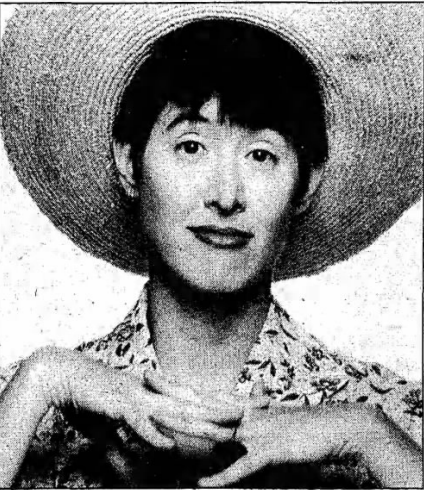
Michelle Shocked is back on tour with a new album on a trajectory that wends its way through as many verses and unexpected detours as her shifting musical styles and outrageous puns. Yet the whole project and persona follows a delicately consistent thread somewhere between the lines of the songs, and in her heartfelt deliberations over questions of music, politics, emotions. Ah, and an inexplicable dose of whimsy.
Chatting over the phone with Shocked, she told me of recent key changes in her personal-slash-political outlook. “You know that saying, ‘life is what happens to you when you’re planning other things?’ Well, I fell in love. And I’m sure that to a certain part of my audience, that’s probably the lamest explanation I could offer. But it’s the true one.
“I committed myself to living in London – adopting various causes was going to be my life, and you would think that that was what made me happiest. I thought that being a performer, songwriter, and singer was the equivalent of being a politician. You give your life to the cause. I thought that was very romantic. I faced the choice of being true to my heart and making a commitment to this relationship that I’m in, or basically being the equivalent to a political nun,” says Shocked.
True to her heart, Shocked moved to L.A. to be with her new husband. (They married on July 4th of this year, “partly because of the free fireworks, of course.”) For Shocked, this watershed decision has affected how she approaches her music. “I don’t feel that I have really been very successful as a protest singer. I have lots of emotions. And as I mature and grow, I become more and more comfortable with those emotions. And that’s what I really have to offer: the kind of twists and turns that your life takes as you learn to be comfortable with yourself.” At the nexus of emotional responsibility and politics, Shocked says she keeps “coming back to the basics, which isn’t surprising having been raised as a fundamentalist. But racism and sexism are a real good place to start.”
Talking about the private and the political, part of Shocked’s singularity is her ability to move, seemingly effortlessly, through so many moods: the heartfelt “Memories of East Texas,” the deliciously flip “On the Greener Side,” and the big isshues.[sic] A humourous twist with a political bite is perhaps the most telling slogan; after all, it sometimes seems that “God is a real estate developer” and if it “looks like a Mona Lisa [it] smells like tuna fish.” For Shocked, humour is a survival strategy: “So, when you say there’s a sense of humour or spontaneity, that’s the real work of just trying to be happy, to be alive, and to have a sense of compassion.”
Taking stock, Shocked has undoubtedly “come a long way” since the runaway hit of the bootlegged [The] Texas Campfire Tapes. This acoustic guitar-toting waif with an attitude is probably now best known for her 1988 release, Short Sharp Shocked – a countryish storytelling album that has outlived the so-called “folk revival” of the mid-‘80s. With the soulful “Anchorage” (overplayed on North American radio), this album more than fulfilled the promise of the earlier simple voice and guitar release. But if it seemed that with Short Sharp Shocked the singer had her patch in the folk scene all sewn up, the up-tempo blues of the subsequent Captain Swing threw some of her followers for a bit of a loop. Shocked, on the other hand, risks the unexpected in a gleefully chaotic mix-and-match of styles.
If the recording industry, or even some fans are confused, for Shocked, the twists and turns of lyrics and influence have a coherence all their own. In the press material for Arkansas Traveler, she clarifies: “What I want you to know most of all is, this record completes a trilogy that started with Short Sharp Shocked on thru Captain Swing and with Arkansas Traveler the entire project rests.” In sum, the trilogy is a protracted exploration of the author’s musical sources.
Shocked freely admits that Arkansas Traveler is a concept album – an approach she says is about as corny as a theme wedding (Shocked and her beau chose a fiesta theme for theirs). “I wanted to give people their money’s worth with this album. It’s one thing to go into the studio and come out with something to sell. It’s another thing to commit yourself to some kind of adventure and then share it with your audience.”
The adventure that became Arkansas Traveler, took a full year on the road, and involved recording stops in Woodstock, Sydney (Australia), Memphis, Dublin [Ireland], and back again to Arkansas and East Texas. The album set out to “bring fiddle tunes into a contemporary musical vocabulary. I recorded songs, fiddle tunes mostly, that I put my own words to, with my all-time heroes and respected contemporaries. To name some: Doc Watson and “Gatemouth” Brown, Alison Krauss and Taj Mahal, Uncle Tupelo, the Hothouse Flowers…”
The result is a lively and anarchic mélange of songs and instrumentation more of less held together by Shocked’s presence as producer, and by her fresh approach to old themes (for example, the unenviable fate of the “Prodigal Daughter,” who has a chillier homecoming than her male counterpart).
It seems to me that there are two binding principles behind the album’s range of styles, from the hard-driving country rock of Uncle Tupelo in [“Shaking Hands] (Soldier’s Joy)” is the notion of modern-day blackface minstrelsy – a concept which has proved controversial for Shocked in her commentary about the shifting boundaries of so-called black and white music forms. The notion of “blackface minstrelsy” tries to get behind some of the ongoing notions of “purity” of traditions, and to look at how the European and African cultural traditions have influenced each other. “Eurocentric music or style influenced by Afro-centric culture, or vice-versa, either one, just keep in mind that when it’s bought by an audience, it has value according to how “authentic” it is.
“It goes both ways. Gatemouth Brown can’t be described as anything other than an electric bluesman, but the fact is his first instrument was the fiddle, which his father taught him. Taj Mahal is another example: the only black man to be within 100 miles of a banjo in the past 50 years, and yet the banjo is an African instrument. And on the other side of course, Doc Watson was lionized as the hillbilly of hillbilly blues and yet was basically discovered playing Rockabilly; and that was, at the time, considered very impure: “Go back to playing your folksongs, Doc, you’re a folksinger.” Of course, Shocked’s latest two albums in particular have borrowed extensively from purportedly “black” forms. But which contemporary musicians haven’t? Which brings up dicey questions like ownership and appropriation – but we didn’t talk about them this time ‘round.
The second binding spirit behind Arkansas Traveler is what I call the “collaborative spirit.” The shift away from the individualistic star system jives with Shocked’s populist political principles. “You can talk about community all you want but trying to live with the community is another thing altogether. There are certain skills that you need in order to work with other people – to recognize their talents based only on music is a real challenge, and I think it’s well worth doing.” Shocked has long insisted that “music, like politics, is too important to be left to the professionals.”
Not surprisingly, Shocked’s unorthodox tactics can get her into hot water with record companies. “I think that although I was very cavalier in my willingness to just follow my own vision, in some ways I’ve painted myself into a corner. And that doesn’t totally terrify me. I think that any time you’re painted into a corner, you just need to use that much more imagination to get yourself out of it…”
Much more remains to be said about the irrepressible Michelle Shocked, but it seems most appropriate to conclude with a tale that might (or might not) be a tall tale. Pulled from Shocked’s handwritten bio, it’s about her roots – in the biological sense.
“My dad and mom met when he was working the Tilt-a-Whirl for my Uncle Johnny…at the State Fair of Texas. I’ve seen a photo of them heading off to the Senior Prom in my Uncle Huby’s ’59 Cadillac and he was handsome but she, she was beautiful. I think it happened that night.
“I have always been fascinated with the details of my conception…But I remember what my mother said. In church each Testimony Sunday, she would stand in front of the congregation and bear witness to the tragedy of her young life (my conception) and then, lip trembling…”and I was not married.” I would squirm there on the front pew we always sat in, a shining example of a Mormon family (eight kids, for Chrissakes!).
“Now you know my deepest secret. I was born illiterate.” [sic]
Added to Library on May 9, 2020. (475)
Copyright-protected material on this website is used in accordance with 'Fair Use', for the purpose of study, review or critical analysis, and will be removed at the request of the copyright owner(s).