Race and role-playing: A singer's blunt views
by
Dan DeLuca
Philadelphia Inquirer
July
26,
1992
Original article: 
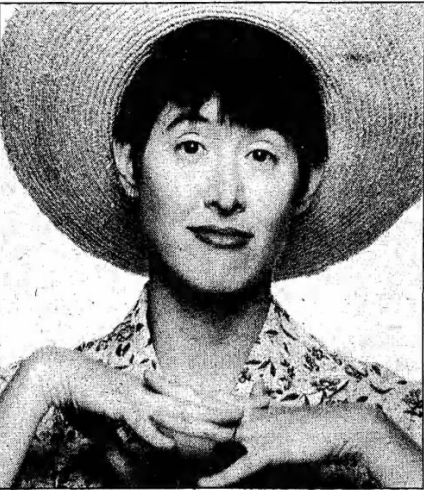
It’s not every artist who’d feel the need to distinguish her convictions from those of her backing musicians. But then Michelle Shocked has more on her mind than most.
On the inner sleeve of the 30-year-old singer-songwriter’s newest album, Arkansas Traveler, there is printed the following disclaimer: “The views and opinions expressed on this recording are solely those of Michelle Shocked and do not necessarily represent those of the musicians who have generously contributed their time and talent to this project.”
The list of those guest artists reads like a Who’s Who of American Roots Music: Taj Mahal, Doc Watson, Pops Staples, Clarence “Gatemouth” Brown, The Band’s Levon Helm and Garth Hudson, the St. Louis punk-roots group Uncle Tupelo, and fiddlers extraordinaire Mark O’Connor, Jimmy Driftwood and Alison Krauss. And Shocked didn’t want to put words in their mouths.
“I didn’t want them to have to support my opinions and ideas,” Shocked said in a recent interview from the houseboat on which she lives in Redondo Beach, Calif.
“I felt I was putting them in the position where somebody might ask them to subscribe to my agenda. And I have a tendency to have a big mouth.”
You can say that again. Shocked – who plays at the Mann Music Center tomorrow night, with headliners Bob Weir and Rob Wasserman (Grateful Dead members who call their duo Scaring the Children) and Canadian singer-songwriter Bruce Cockburn, and who will play free to Deadheads assembled outside the Mann sometime between 6 and 7 – has never shied away from controversy.
What’s got her dander up this time is race. Arkansas Traveler, a bucolic tour through homespun musical traditions, works as a sort of feminist On the Road: It was recorded with the aid of a mobile studio that Shocked packed up in a truck and drove to her heroes, and it showcases an awful lot of hot picking.
But Shocked also means Arkansas Traveler to be an essay on the continuing role of the blackface minstrelsy in American culture.
She knows she’s likely to be misunderstood. She considered posing in blackface for the album’s cover, but changed her mind when she became convinced that people would confuse her intentions. She’s even invented a phrase – “raising the tar baby” – a synonym for broaching the ultrasensitive subject of blackface and its continued existence.
As Shocked and her husband, rock critic-historian Bart Bull, tell it – in Bull’s work-in-progress Does This Road Go to Little Rock? and in an essay about the L.A. riots that the couple wrote for Billboard magazine – the nearly 200-year-old blackface tradition still flourishes. The custom began, say Shocked and Bull, with white performers in blackface grotesquely mimicking blacks. Seeing whites’ delight with these gross caricatures, black entertainers began to play into stereotypes of typical “coon” behavior.
Today, say the couple, the tradition continues with white performers “blacking up,” and with black gangster rappers aiming their cartoon characterizations at a white audience interested in having racial stereotypes confirmed.
“Why is this such a controversial subject?” Shocked asks. “Not only because white entertainers put black paint on their faces and performed in what was often thought of as simple parody. But because black entertainers are involved in this.”
It’s not as simple an issue as “white-face good, black-face bad,” Shocked cautions. “For whites, an expression of soulfulness was made available to them when they put on the paint. And for blacks, it wasn’t just that they were forced to [perpetuate stereotypes] for economic reasons. It also gave them safe passage – what we would now call ‘crossover appeal’ – into another world. It allowed them to play a role that whites were familiar and comfortable with, and weren’t threatened by. And you know what? I’ve just described rap music to you.”
Shocked is overflowing with occasionally contradictory opinions on the subject, but – happily – that’s only when she’s talking. Arkansas Traveler does not play like a political tract. Instead, like all of Shocked’s work, it mixes charged ideas with wit, attitude and self-exploration.
Shocked’s career began unexpectedly. After a seriously troubled adolescence in Dallas – she ran away from home at 16, threw herself into anarchic causes throughout her youth, and was admitted to a mental hospital by her mother in 1984 – she was first heard from with The Texas Campfire Tapes, an album recorded surreptitiously at the Kerrville, Texas, folk festival in 1985, and released without her knowledge. Next thing she knew, the album had shot to the top of the alternative music charts in England, and she was being offered a major-label record deal.
The result was 1986’s Short Sharp Shocked, which came with a cover shot of police dragging Shocked from a demonstration at the 1984 Democratic National Convention in San Francisco. The album – which Shocked considers her first – generated a mini-hit in “Anchorage,” her winsome, best-loved song. And her gender-hopping songs and tough-sailor demeanor quickly earned her a following among fans of women’s music.
After Short Sharp Shocked came Captain Swing, her 1988 album, which was weighed down by cumbersome horns and an overly arch attitude.
“I always planned that these three albums would be a trilogy that traced my music back to its root,” she says. “That after Short Sharp Shocked, I would do Captain Swing to explore the swing element, and that I was going to make an album called Arkansas Traveler with these old fiddle tunes my dad taught me.”
It wasn’t until Shocked met Bull, who interviewed her for Spin magazine, that she began learning about blackface minstrelsy. The couple, who have worked and lived together for three years, were married on July 4.
“I didn’t really know anything about the history of the music, but it had been part of Bart’s work for 10 years,” she says. “He’d point things out to me at shows, like ‘See, this is what I’m talking about.’ I was really receptive to it, and the idea of rock and roll being another form of minstrelsy started to become clear to me.
“Bart wants to tell the whole story [of minstrelsy’s history], with all the sordid little details,” she says. “But I want to tell it with pop music. I haven’t found quite the simplistic way to do it yet, but I keep trying.”
Last year, Shocked performed all of her as-yet-unrecorded Arkansas Traveler material on a club tour. Each night, she brought an audience member on stage, and showed him or her how to play Woody Guthrie’s “Woody’s Rag” on mandolin. It was the first song that Shocked’s father ever taught her.
“I wanted to take the magic out of it, and show people that music is just a matter of putting your fingers on the right strings,” she says. “I call it my ‘”Strawberry Jam” Manifesto’ [after a song on Arkansas Traveler]. Music and politics are too important to be left to the professionals.”
The experience of going on the road to make Arkansas Traveler helped mellow her, Shocked says. “I used to be much more of a purist, politically and culturally. I hated the idea of working within the system. But I realize now that my alienation was more of a spiritual question than a political one, and I’ve got to do all these unglamorous things like register to vote.
“And making this record taught me a lot about life as a journey,” she says. “You know, the process is just as important as the destination.”
Added to Library on July 10, 2022. (494)
Copyright-protected material on this website is used in accordance with 'Fair Use', for the purpose of study, review or critical analysis, and will be removed at the request of the copyright owner(s).