Talking about 'Arkansas Traveler' with Michelle Shocked
by
Chris Heim
Chicago Tribune
October
16,
1992
Original article: 
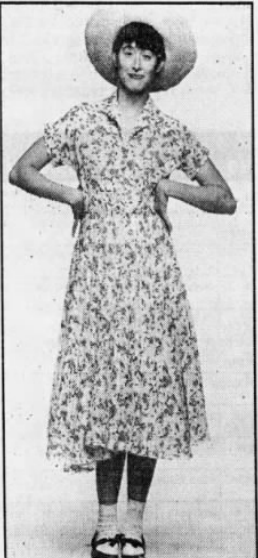
“I received a certificate signed by Gov. Bill Clinton that is basically an ‘Ambassadors to the State of Arkansas’ certificate,” says Michelle Shocked. “The state has this program called The Arkansas Traveler,’ and you get this very formal certificate. There’s a photo taken from the Currier and Ives drawing that was on one of the early recordings of the song “Arkansas Traveler,” and they give you a little paper that explains that you must visit the state, have a nice long visit and enjoy it, but you must always say nice things about the state of Arkansas. And it also [told] the story [of the Arkansas Traveler].
“A stranger was traveling through Arkansas, and when he stopped to ask for directions, he encountered an old fiddle player playing over and over again the first half of a song. When he inquired why he only played the first half, the fiddler asked him if he would teach him the other half of the tune. The stranger obliged, and then the fiddler invited him into his home, fed him a nice meal and gave him a place to stay for the night.
“I hope that resonates with anyone who has had any experience with traveling. You could say that you’re out there looking at the scenery or looking at the sights, but I think what you really want to encounter more than anything is the way that the place affects how people live. The fact that the fiddler knew that first half [of the song] speaks of what you have to offer by being from a place, but you’re traveling through and you know the other half of the song. It’s like a Zen koan in many ways. The two parts make up the whole.”
But Zen and the art of Arkansas traveling turned out to be a much longer and stranger trip than Shocked had anticipated, opening up new levels of meaning as she explored the old song[s] and related ones on her latest album and current tour, both dubbed The Arkansas Traveler. [sic]
Shocked’s latest record concludes a trilogy of studio albums that consciously explored her wide-ranging musical influences and worked to undo her image as a “folk” artist. That notion was fostered by her debut, The Texas Campfire Tapes, a spare, solo, singing-around-the-campfire set recorded on a Walkman at the Kerrville Folk Festival in Texas and a hit on the independent charts in England before Shocked even knew of its release. Signed to a major label, she developed her trilogy to showcase the other styles and sounds that made up her musical identity. On Short Sharp Shocked she paid her debt to Texas songwriters and honky tonkers. Captain Swing celebrated the Southwestern jump blues and swing tradition. Then Arkansas Traveler was planned as an excursion into old fiddle tunes, some of the first music Shocked heard as a youngster going to bluegrass festivals with her father.
“I just told Bart [Bull, music critic and now Shocked’s husband] that I was going to make this album called ‘Arkansas Traveler.’ And he said, ‘Did you know that’s an old blackface minstrel routine?’ And I said, ‘A what?’ That was my introduction to the whole thing,” says Shocked.
What she discovered was one of the most influential yet least-known chapters in American popular music and mass entertainment. The prototype of blackface minstrelsy appeared in this country in the late 1820s (particularly in a song and dance routine called “Jim Crow” created by Thomas Rice) and solidified in form and popularity in the 1840s.
In classic blackface minstrelsy, performers would appear in burnt-cork blackface (this was true for both black and white troupes) and perform a variety of gags, songs and dances revolving around distorted expressions of black dialect, character and plantation life. Some of this country’s best-known, so-called traditional songs emerged from minstrelsy, including “Old Dan Tucker,” “Listen to the Mockingbird” and “Cotton-Eyed Joe.”
Similarly, some of America’s best-known performers began their careers in minstrel shows, including black artists like Ma Rainey, Bessie Smith, W.C. Handy (“the father of the blues”), Bert Williams and the highest-paid black minstrel performer of the days, Billy Kersands. Stephen Foster, Daniel Emmett (who wrote “Dixie”), Jimmie Rodgers (“the father of modern country”), Bob Wills and Al Jolson all built careers in blackface.
The blackface minstrel show was built around wildly exaggerated and stereotyped portrayals of blacks. Why would what seem to us today to be such ugly and demeaning caricatures become the focus of one of America’s first forms of mass entertainment? It is perhaps no coincidence that the popularity of blackface minstrelsy coincided with the development and growing influence of the abolitionist movement.
“The basic idea that Bart and I have worked from is that strange cultures can either be entertaining or terrifying,” says Shocked. “Given a choice you would want to try to make it entertaining. So you would present those cultures in a way that was non-threatening. You would broaden the characterizations of the culture into exaggerated stereotypes, which with less and less artistry become parodies. But at the heart of it was, I believe, a sincere desire to understand this Afrocentric culture that they were encountering.
“That’s the heavy side, the cultural/political side. There’s another side. In looking to the positive and embracing this tradition, I have come to believe that what Afrocentric culture has to offer to Europeans is a form of expression not available in Eurocentric culture. What we’ve come to refer to as soulfulness. It communicates what is really at the heart of why we sing, why we make music. It’s beyond words, beyond poetry, beyond dance, even beyond melody.”
With the blackface minstrelsy tradition, there also came a codification and popularization of what was emerging as a uniquely American musical sensibility. Like the story of the Arkansas Traveler, two strangers met in this country, Europeans and Africans, and each contributed half of the song. From the earliest days of American history, European and African musical traditions began to interact and intertwine. Virtually every form of American popular music right up to the present, be it country, jazz, rock or soul, is an intermingling of these traditions, though the history is varied, complex and often forgotten or misrepresented. Long before Elvis Presley, white and black artists were borrowing extensively from each other’s musical traditions. Listen with an open ear to some of Jimmie Rodgers’ work and you’ll hear country blues, read the reports of Robert Johnson’s complete repertoire and you find the roots of modern country.
“In many ways,” says Shocked, “this history has managed to be revised and written out because of the old ‘means of production’ coming into play. With the recording machine, blackface minstrelsy was exactly caught at the crossroads of change. You had white field recorders and collectors going out [to record it]. And a very simple process took place where the black string bands were recorded and labeled as blues records and the white string bands were recorded and labeled as hillbilly or country records.”
The process, says Shocked, continues to this day. From Michael Bolton to Michael Jackson, the Rolling Stones to Run D.M.C., the two halves of the song—black and white, African and European musical traditions, stereotypes and sympathetic melding—do an elaborate and often ambivalent dance around each other.
Shocked decided to explore and expand on that tradition on the Arkansas Traveler album, recording in her own style and words some of the old minstrel tunes and traveling around the country and to Europe and Australia to record the songs with a varied cast of musicians, including Chicago blues/gospel guitarist Pops Staples, Irish folk-rockers the Hothouse Flowers, Texas blues guitarist/country fiddler Clarence “Gatemouth” Brown and contemporary bluegrass group Alison Krauss and Union Station.
“The choice of collaborators was very deliberate,” she says. “I wouldn’t presume to say that’s why we recorded with black musicians and white musicians. I’m talking about musicians who in their own way worked in the traditions of blackface minstrelsy, including the Red Clay Ramblers, a great deal of whose repertoire consciously comes from a blackface minstrel tradition. And then there’s the people we deliberately chose to work with who have ‘folklorist damage.’ People like Doc Watson, who started out playing rockabilly based on the music he heard on the radio and then when he was swept up by the folk revivalists, they simply slapped his wrist and told him to play songs [like] ‘Froggy Went A Courting.’”
Michelle Shocked’s Arkansas Traveler show plays Thursday and Oct. 23 at Park West. The lineup of performers still includes Taj Mahal, but The Band is no longer on the bill.
Added to Library on July 13, 2022. (633)
Copyright-protected material on this website is used in accordance with 'Fair Use', for the purpose of study, review or critical analysis, and will be removed at the request of the copyright owner(s).