Shocked keeps fires burning for homeless
by
Anne Gowen
Washington Times
April
26,
1990
Original article: 
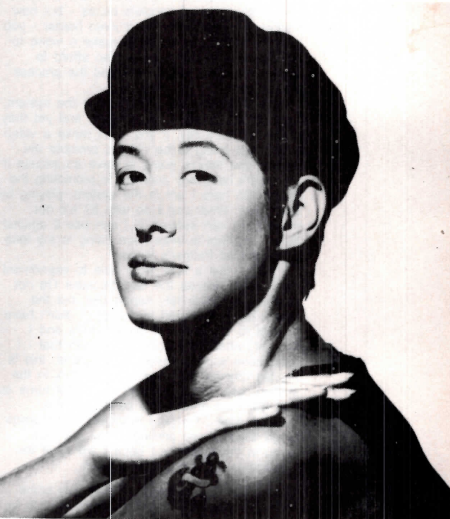
Folk recording artist and populist politico Michelle Shocked can find a campfire to sing beside anywhere, be it the flat, green land of her native Texas or cold New York City streets.
“I have very visual images of New York,” she says in her bittersweet twang. “When I lived there, I’d sleep really late and about 5 o’clock I’d get up. I’d go out to different places that played music until 2 in the morning.
“Then I’d head over to Tompkins Square Park and play. The bums would be there making fires in garbage cans. It was kind of like a campfire, I guess. Then, just as the sun was coming up, I’d head back.”
Michelle Shocked ran away from home at 16. For the greater part of her adult life, until she was discovered playing at a folk festival in 1986, she was a “squatter.” Squatting is a political movement that mobilizes the homeless to occupy abandoned buildings until they are evicted by officials.
She lived in New York, Amsterdam, and San Francisco, where she was arrested at a political protest. A newspaper photo showing her struggling with riot police is on the cover of her second album, Short Sharp Shocked.
“In World War II, soldiers came back from the war and were shell-shocked,” she says. “But even in the Cold War there are casualties and victims.”
When she was at the Kerrville (Texas) Folk Festival, a British record producer asked her to tape some songs she’d sung around the campfire the night before. Sitting on a fence post, she recorded into his portable tape recorder while crickets chirped, and trucks passed by on the highway. The tape, including the background noises, eventually was released in England on the small Cooking Vinyl label.
“I had a record, and I didn’t even know it,” Ms. Shocked says, explaining that she didn’t find out about The Texas Campfire Tapes until it was No. 26 on the British independent charts. The album eventually hit No. 1, and Ms. Shocked signed with her current label, PolyGram.
The black-clad singer, with her trademark fisherman’s cap, makes a striking image on celluloid. In a brash video from her new album, Captain Swing, she struts and plays it up in a gleeful parody of Robert Palmer’s “Addicted to Love” video.
Quite a departure for someone who saw her first video (for 1988’s “Anchorage”) and cried, “Give me myself back!” It’s all part of Ms. Shocked’s plan to reach the public by, as she puts it, “working within the system.”
“I’m working from the inside, using my music as a forum for the homeless,” she says. “When I was living on the streets, getting evicted, nobody was listening.”
Music-industry-nose-thumbing aside, Ms. Shocked at her best is a fine storyteller, a tale-spinner in the tradition of the Old South. In “Memories Of East Texas,” she describes “Those pine-tree rolling hills/Covered in the springtime with golden daffodils/Rowing on Sandy Lake come April/Harvesting hay in June.”
Despite a troubled adolescence spent chaffing against her mother and stepfather’s strict fundamentalism (her mother once had her committed to a mental institution), Ms. Shocked remains a country girl at heart.
“I’ve never seen a music scene to rival Texas,” she says. Mention the folk music revival brought on by the music of Tracy Chapman, Suzanne Vega and fellow Lone Star-Stater Edie Brickell, and she says sharply, “Oh, I hate that. In Texas that music never died. I’d rather call it ‘folk survival’ ‘cause I experienced it firsthand.
“When I think of Texas, I think of sitting around the wood stove at my dad’s, playing music. We’d break out the beer, and his friends would come over and we’d have a picking session. Nobody was that great, and by the time everyone was drunk, nobody was great.”
Added to Library on May 2, 2020. (497)
Copyright-protected material on this website is used in accordance with 'Fair Use', for the purpose of study, review or critical analysis, and will be removed at the request of the copyright owner(s).